
Making software is changing. It’s changing quickly.
We’ve gone from chat-based tools to autocomplete, to agent extensions in your IDE. Each generation of tools makes it easier to write code in your IDE.
But there’s still a bottleneck - it’s you, writing code, in your IDE.
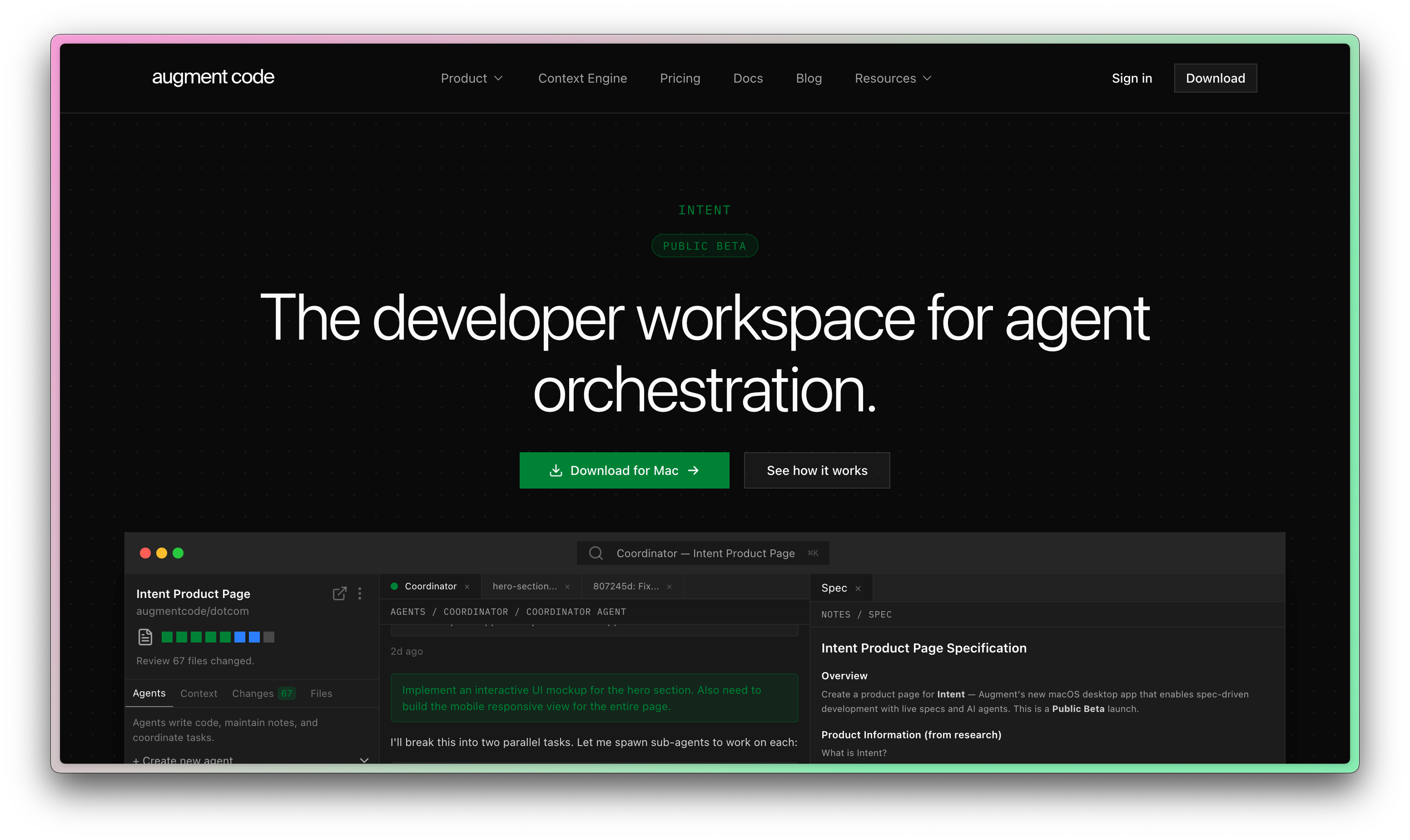
It’s time to move past the IDE.
IDEs are built around files. As we do more and more work through agents, shouldn’t our tools be focused on agents?
You’ve probably noticed some of the most common tools looking less like IDEs and more like chat applications. The new Cursor Mac app and Cursor have started to center more around agents than editing files.
Augment Code has been cooking up something really incredible that reflects their vision for the future of software development. You’ve already read about how Augment’s context engine makes their tool uniquely useful in large codebases. So it shouldn’t surprise you that their new tool, Intent, is an awesome addition to this space.
Today’s post is generously sponsored by Augment Code, which also means I got early access to test out Intent. And it’s awesome.
Read on - I’ll cover what intent is, how it’s unique, and I’ll even show you how I make changes to my SaaS with it.
What is Intent?
Intent is Augment’s vision for what comes after the IDE.
I don’t have to tell you that developing software has become extremely scattered. When I try to do something at work, I’m bouncing between Jira, my IDE, a browser tab with the live site, a browser tab with my dev server, a couple of terminals, some LLM chats, and so on.
It’s a huge problem. Theo had a really good video complaining about some of these that resonated with me.
Intent takes this on with 3 big wins for you:
Agent orchestration
Agent orchestration is something that we’ve been talking a lot about lately. Software development is moving from tweaking code in files to orchestrating parallel agents across projects towards a product outcome. Intent helps you do this in an insane way, and I’ll show you later on.
Isolated workspace
The isolated workspace thing is huge for me. Having everything you need (agent chat, diff view, terminal, and test browser) in one place is starting to become a bare necessity. Intent does this well, and we’ll look through an example later in the article.
Living specs
Living specs are something that I’ve not seen done well with other agent-first tools, so I’m pumped that Augment got this right. Living specs help you work at a higher level of abstraction. I’ll show you what I mean in our demo.
What makes Intent unique?
Beyond these superpowers, Intent has some attributes that make it really unique.
Intent is model-agnostic
I’ll be honest - I’m getting a little tired of AI models and AI tools being coupled. Claude models can be used in lots of tools, but obviously, Claude Code is pushed as the tool of choice. The same is true for Codex models - there’s a Codex CLI and app now!
Something uniquely interesting about Intent is that it’s model-agnostic. You can choose your own model. You can even choose your own agent with an existing subscription!
You shouldn’t have to change your entire tooling just to use the best model. Getting so glued to Claude Code was a mistake; it made my transition to try out the newest Codex models HARD. I was considering moving to OpenCode as a result, but Intent might be my new model-agnostic default.
The Augment context engine
The context engine is historically Augment’s biggest differentiator. It ingests your entire project and keeps a real-time semantic index. This means when you ask a question or generate code, Augment truly knows the surrounding context.
This is especially useful in big projects, and it really sets Intent apart from something like OpenCode. A multi-agent world needs good context. Augment helps you make sure your model actually gets it.
I have some more thoughts on context here:

Living specs
Traditional specs start to get out of date the second you ship something. Projects aren’t static, and your specs shouldn’t be either.
In Intent, when an agent completes work, the model updates the spec. When you want to change requirements, those updates propagate to all active agents.
Using Intent
Let’s get into building. You can download Intent and follow along if you like.
The onboarding for the product is really pleasant. You get to choose your agent.
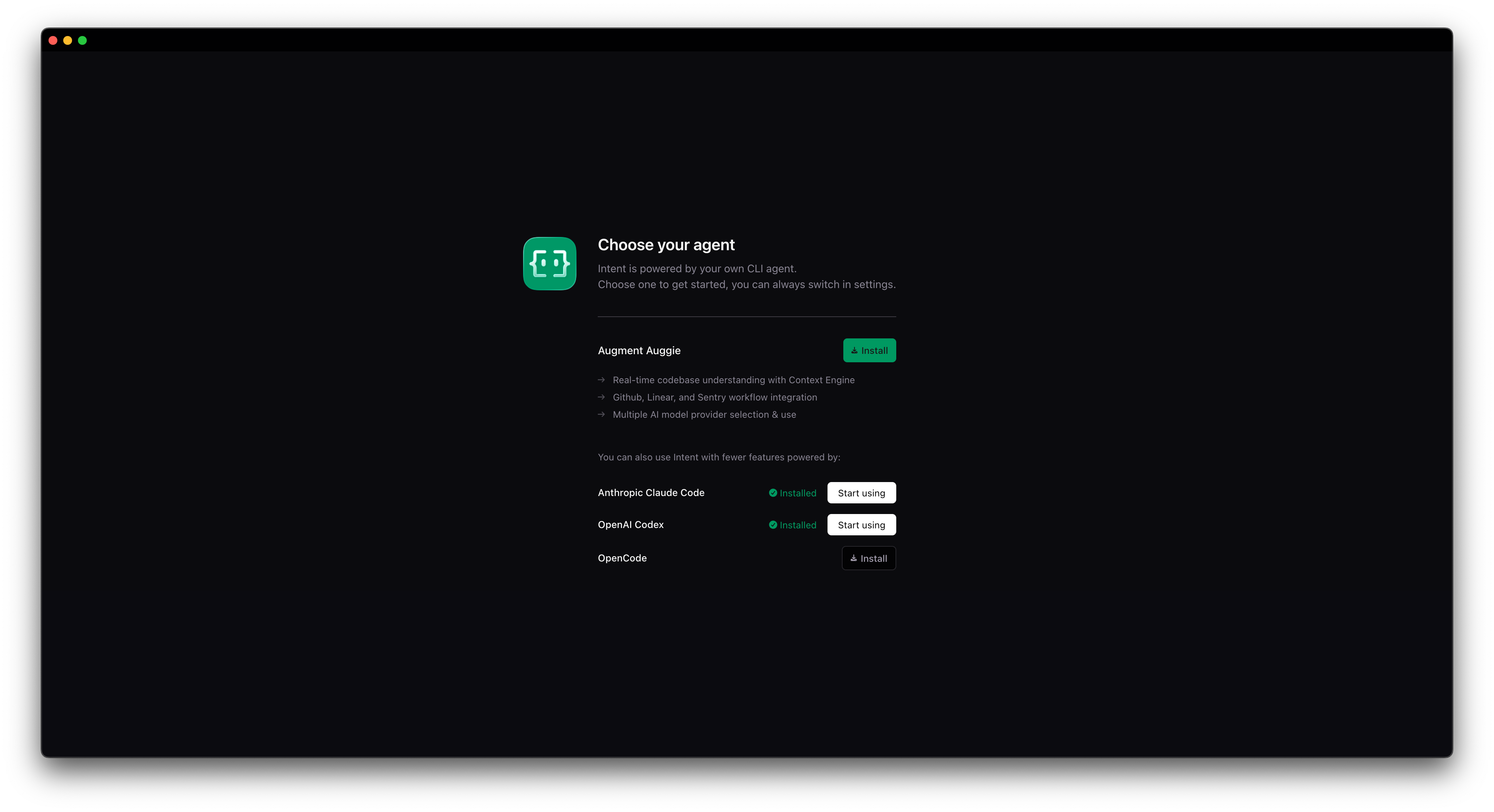
Choosing Auggie gives you a great context engine, so it’s what I’ll do for this demo :)
I’d like to build a little distraction feature for my Deep Work Timer SaaS. Here’s the prompt I’ll start with:
I’d like to add a “distraction feature” to this deep work timer. I want users to be able to tap a button and have a quick field to enter a distracting thought they’d like to follow up on. This “distraction” would go into a list that is visible above the field they entered it into. The idea is that they can revisit that list when they’re done focusing.
I want it to be a simple and minimal design that follows the rest of the application design. I want it to be a little brain icon floating button on the bottom right next to the existing help/question button. Store the distraction items in local storage.
Right away, a Coordinator agent started to break down my spec into tasks and delegate it to implementors that can run in waves.
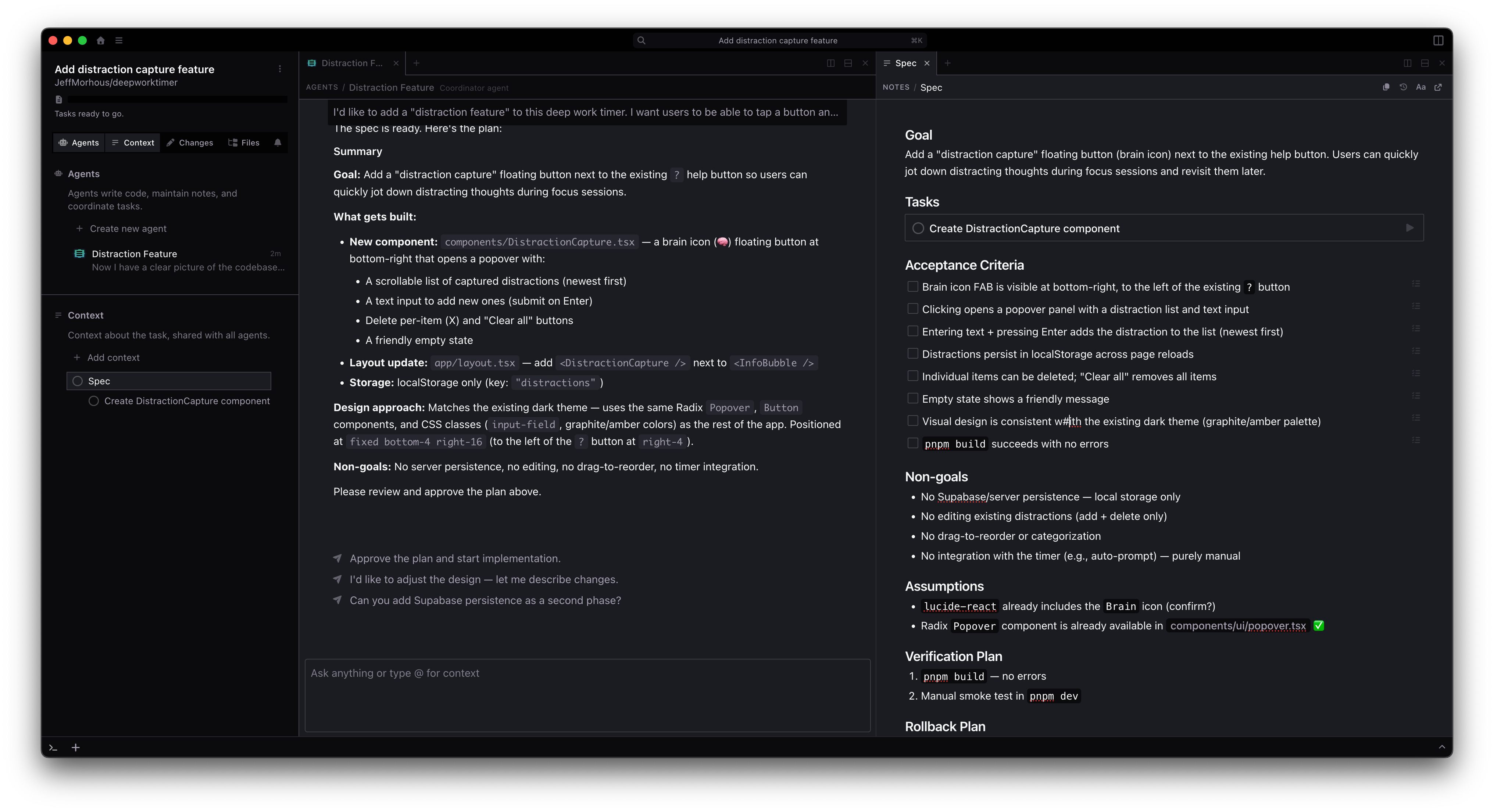
This initial spec is good, but it’s also easy to edit. You can describe edits or make them directly. I made some minor changes to be precise in this spec.
Then, I selected “Approve plan and start implementation”.
Once you’re comfortable with agentic tools, now is a great time to spin up a second agent in parallel. But for this example, we’ll stay focused and monotasking on our distraction feature.
I’m impressed that much of the implementation time is spent scanning the codebase for appropriate context. But not surprised, this is natural for the Augment context engine.
The coordinator agent delegates the implementation to its more specialized counterpart, the implementor agent.
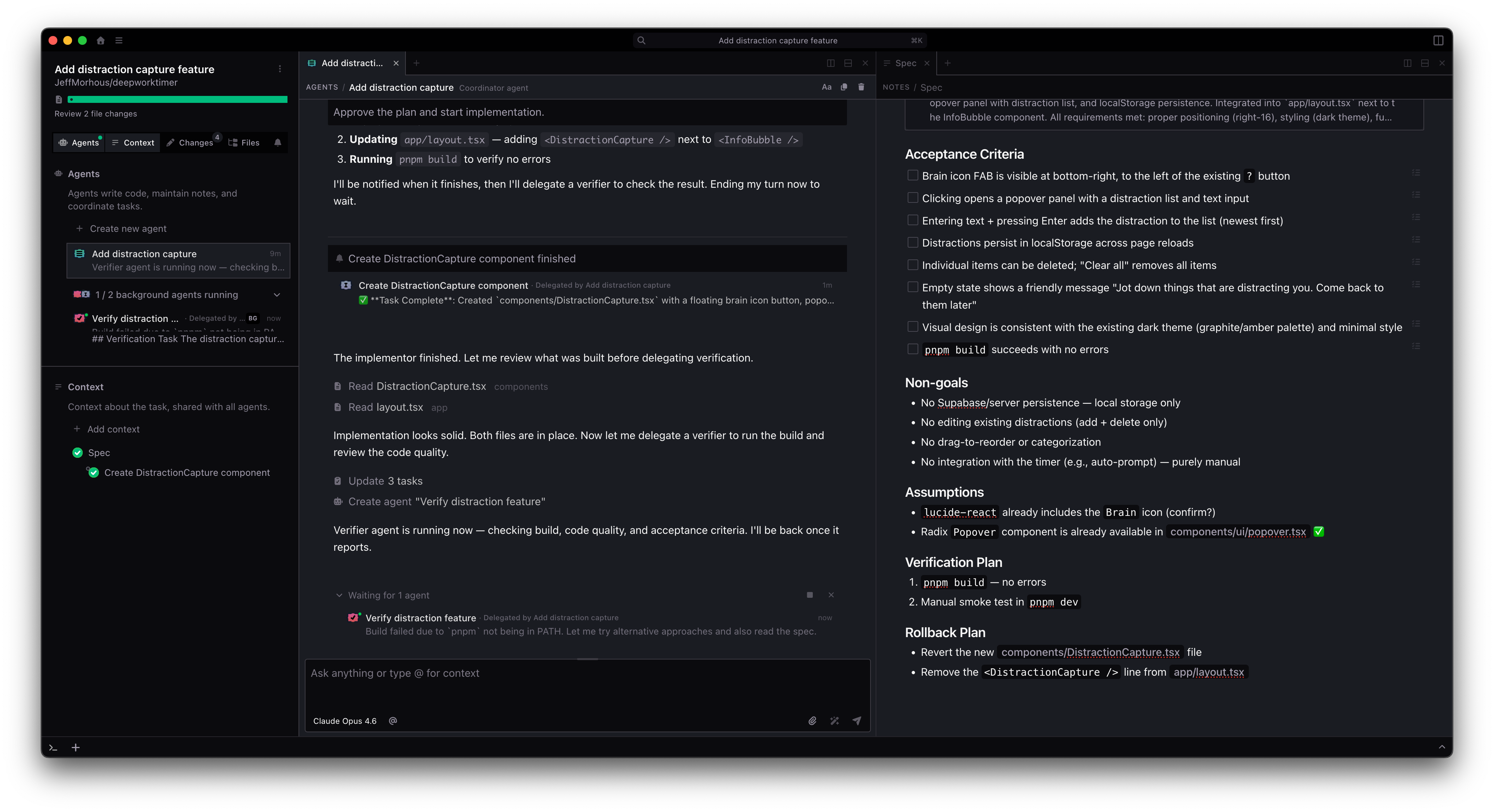
After implementation, the coordinator delegated the work to check that the spec was actually complete to the verifier agent. This is a huge win for automatic subagents, something I think Claude Code is definitely lacking.
You can customize this to bring in your own specialist agents and control how they’re orchestrated. I think you’re going to have a lot of fun doing that.
Here’s the agent’s first shot at implementing my feature!
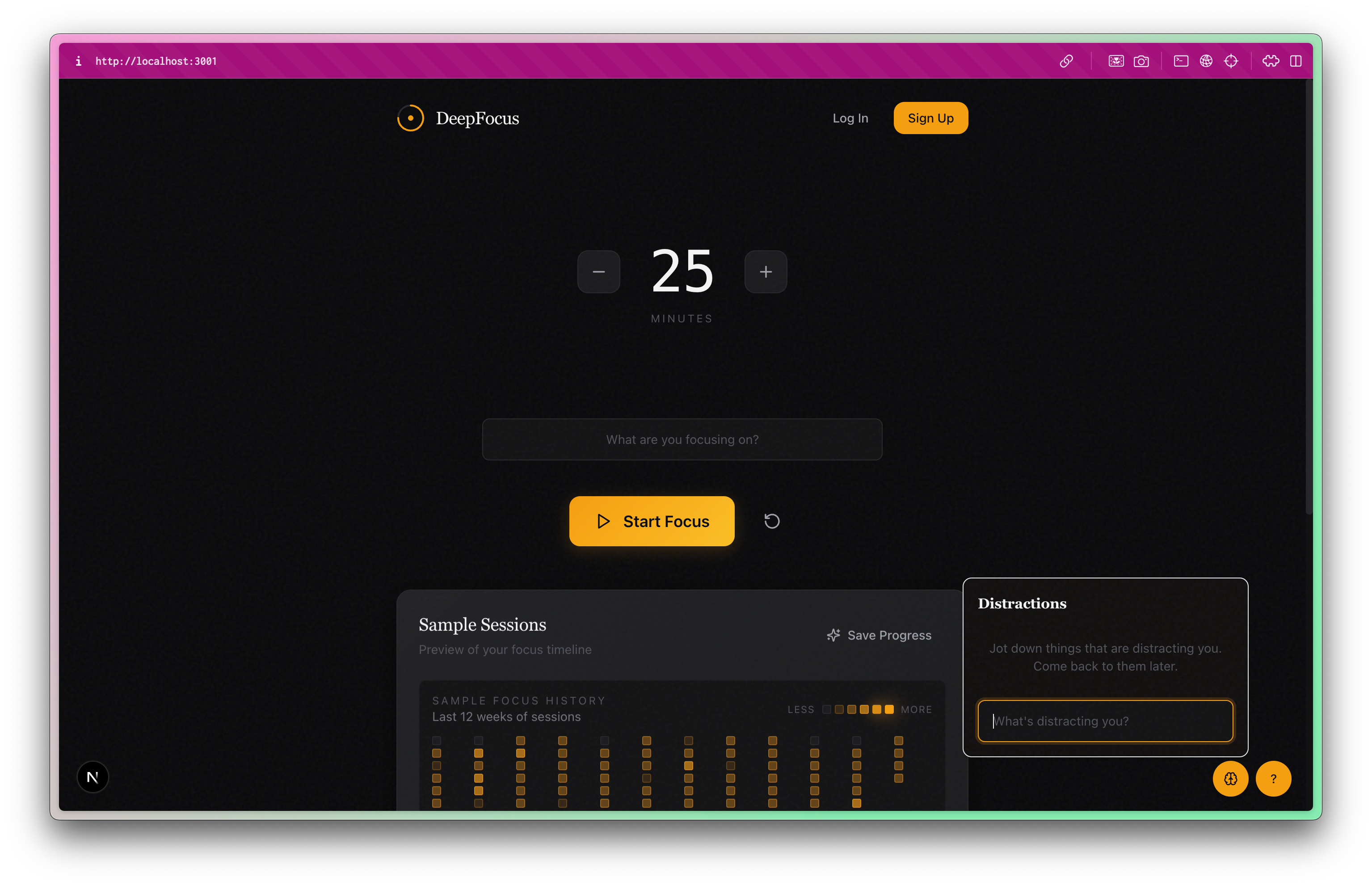
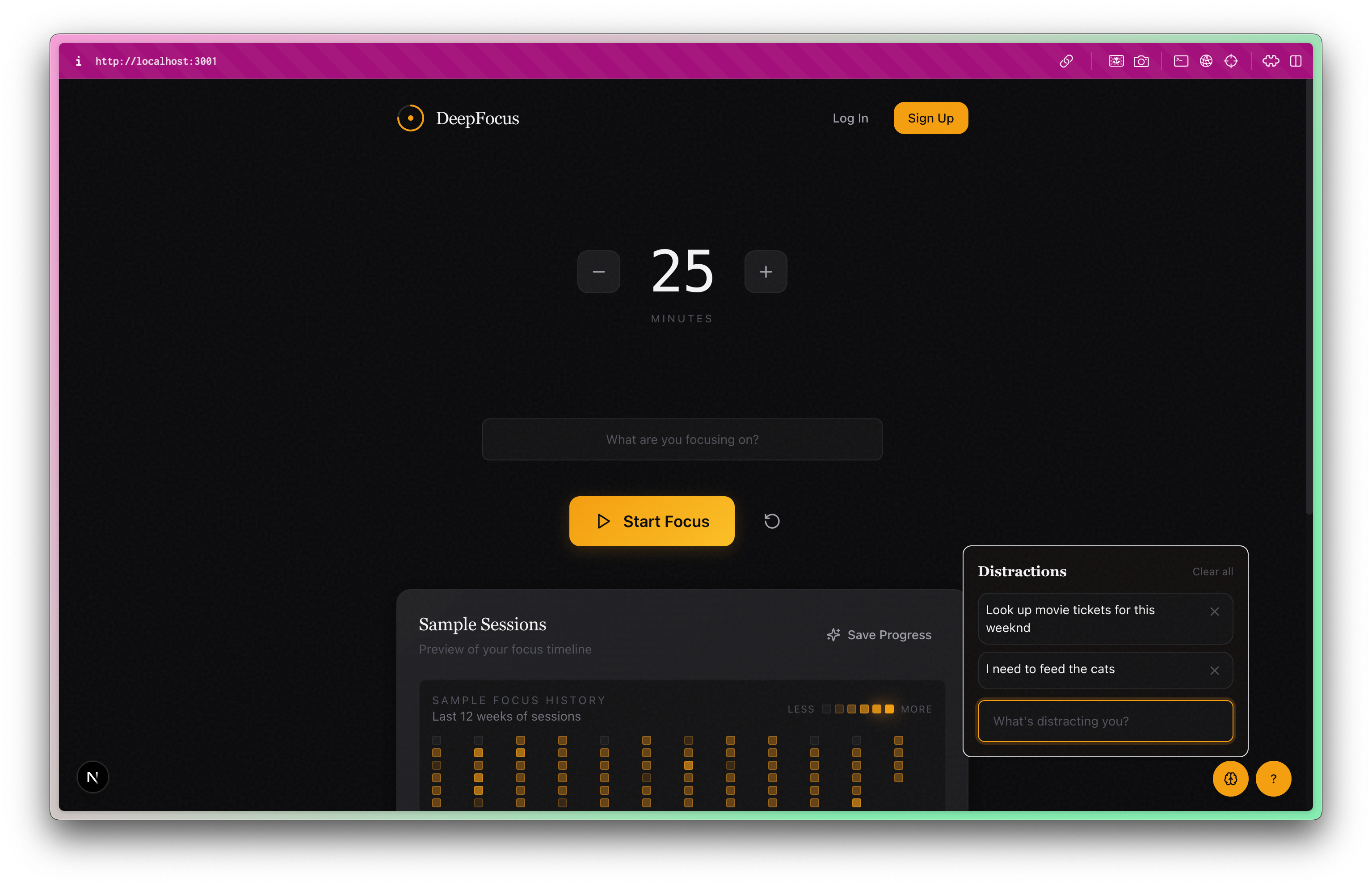
I’m really happy with Intent’s first pass at this. No notes! I had the agent push a PR, which I tested and immediately merged.
What do you think? Will Intent become part of your workflow?
Whoa super excited about living specs!
oOoOO, that's something I want to play with!