
Hey friends, I’m excited to share another deep dive with you today. I’m going to show you how to use Fable 5 as an orchestrator in Claude Code.
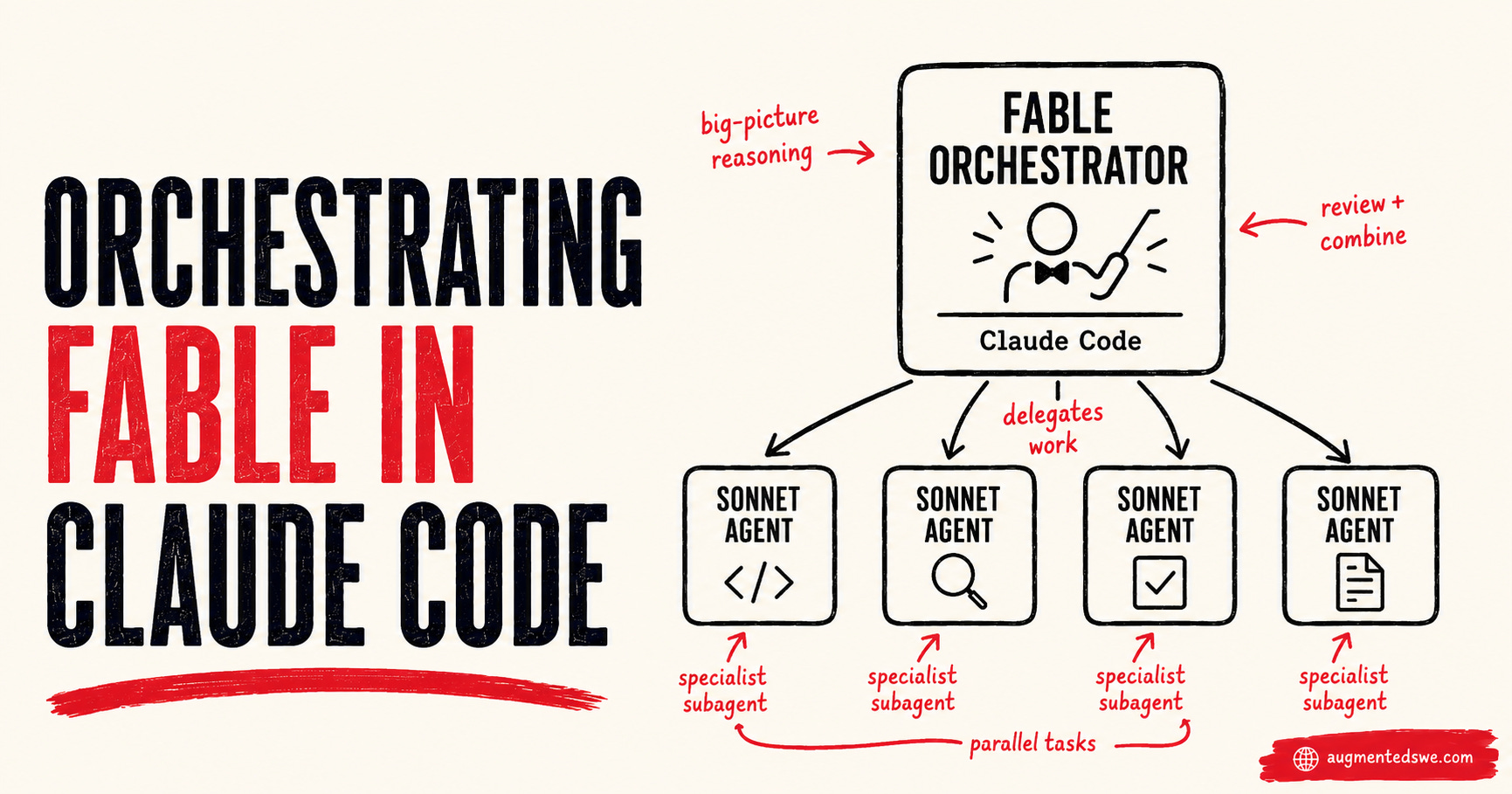
Why an orchestrator?
Because Fable is EXPENSIVE. If you have Fable do planning and orchestration, it can delegate implementation to cheaper models.
I’ll walk you through this concept, then show you how I used it to add a pretty significant feature to a Next.js web app.
If you’re curious about SOTA models like Fable, you’re in good company. The AI-Augmented Engineer is dedicated to helping software professionals use AI to make meaningful improvements to their work.
I’d love to have you join us and get notified when we share more tutorials like this.
Why Fable requires special strategy on our part
Fable is an incredibly capable model, but it’s too expensive for practical daily driving.
We’re seeing this pattern emerge where frontier labs are releasing parallel models of varying size. Fable is Anthropic’s most useful model, but it’s also it’s slowest and most expensive.
But smaller models (even Sonnet 5!) are useful to the point that you can use them for a huge percentage of software engineering.
Anthropic themselves is pushing the orchestrator pattern:
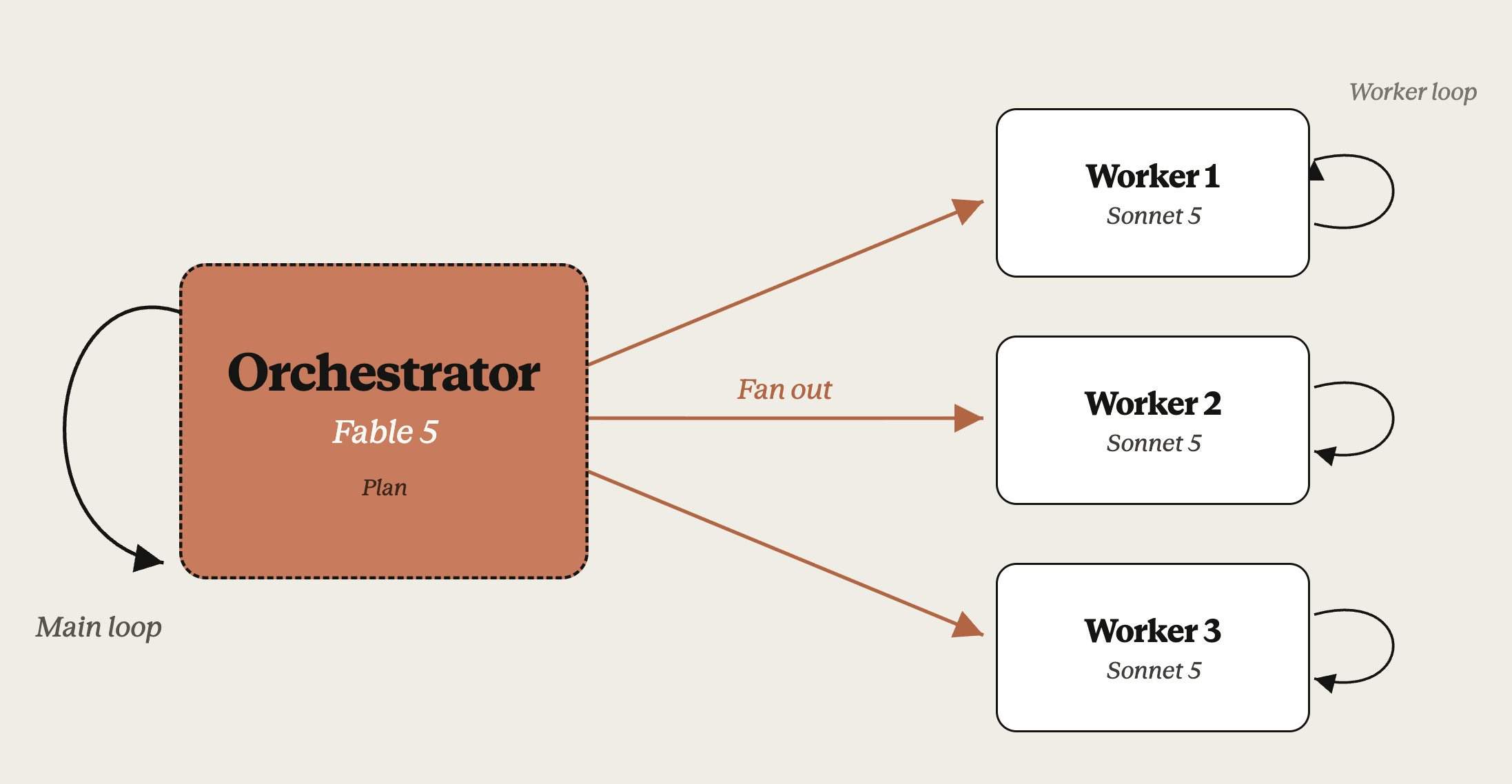
In fact, they shared that this pattern gives remarkable cost savings at minimal performance cost:
The Fable 5 orchestrator achieves 96% of Fable 5 performance at 46% of the price.
The change we’re making with Fable
I recently built a landing page for an info product using Claude Code, but the site only had a waitlist signup.
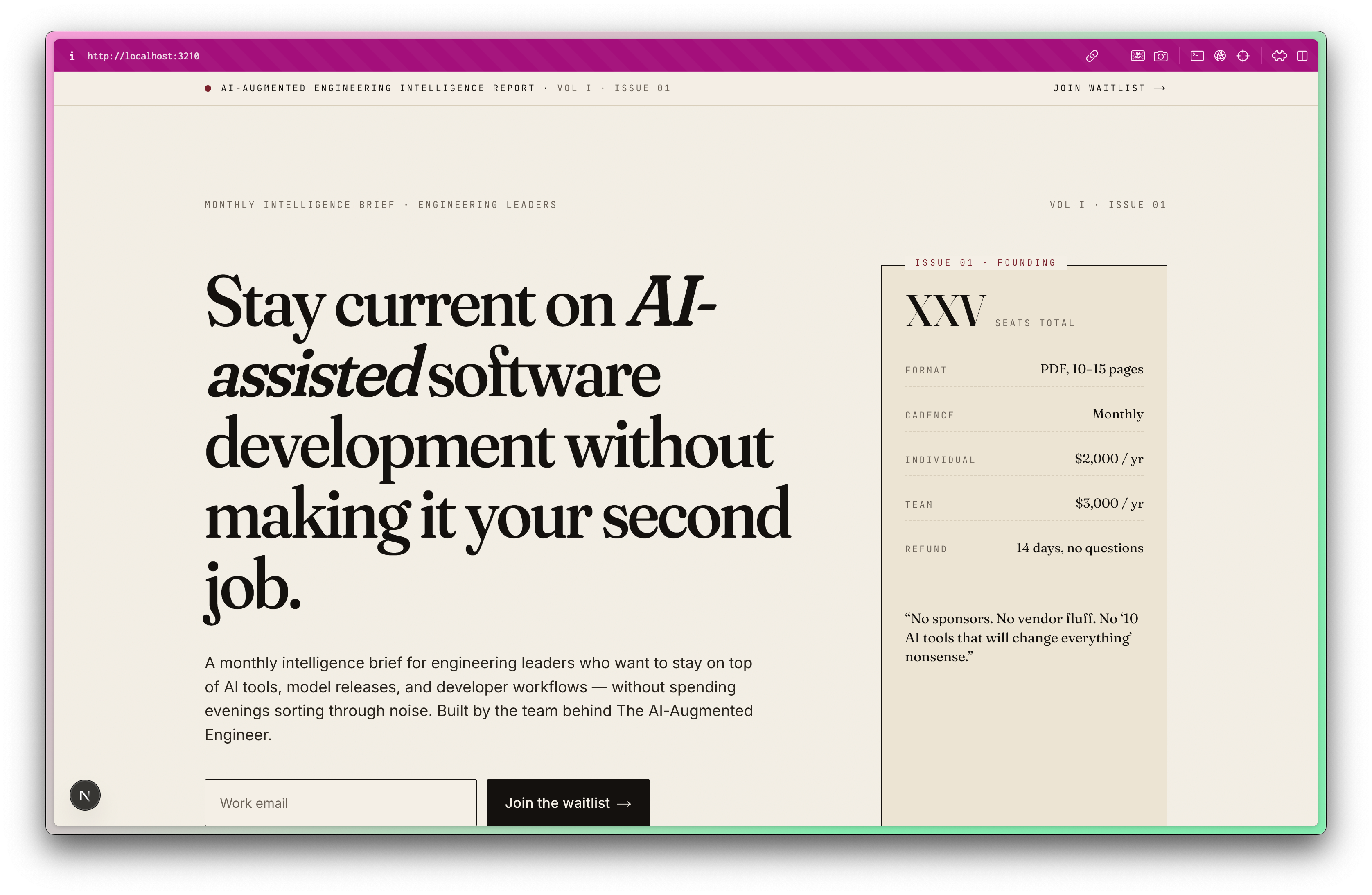
The AI-Augmented Intelligence report is a monthly report for software engineering leaders to keep them up to date on AI.
AI is moving quickly, and keeping up to date with trends, risks, and workflows can be a full-time job. If you resonated with that, I think you’d love the product.
I didn’t want to overengineer a product that didn’t have demand, so I just shipped it with a waitlist signup.
Well, the waitlist is overflowing. I’m only opening 25 spots and there were multiples of that that signed up for access.
So it’s time to actually open the product for signup!
The core of Reports is information. We need to let users sign up, pay, view an index of past reports, and get emails for new reports.
For today’s article, we’re going to add signup and billing.