

A coding agent can help you ship better software. But it can also help you build a massive set of changes nobody has time to understand.
Proton’s AI manifesto is an attempt to address that problem, particularly after some comments about AI usage leaked.
Published on November 1, CTO Bart Butler’s memo argues for reorganizing engineering around agents. One sentence captures its ambition:
Your job is to help the LLM write better code faster. (Proton’s manifesto)
I agree with some of the direction. Engineers should learn these tools, challenge familiar workflows, and take responsibility for improving how their teams deliver software.
But reading the manifesto alongside the reporting about Proton’s internal culture leaves me with a concern: a company needs engineers who will push AI further, and engineers who will push back when a particular use of it is unsafe.
Often, those should be the same people.
Balancing speed and security has always been part of software engineering. AI changes the costs and capabilities involved. It also raises the stakes for getting that balance right.
The manifesto gets the workflow problem right
Butler argues that accelerating implementation moves bottlenecks elsewhere, including CI, approvals, and review. He also calls for shared improvements and organizational investment, while explicitly preserving the importance of expertise, architecture, documentation, and tests.
If you work in software and at a company that encourages AI tools, you’ll undoubtedly agree with the above statements.
Consider a team whose agent finishes a feature before lunch, only for the change to spend three days waiting for a reviewer and another day fighting an unreliable test environment. Faster implementation helped, but the customer is still waiting.
I want more engineering leaders to take that seriously. Using AI effectively should include improving the conditions in which the agent works and the process that turns its output into something useful.
Today’s newsletter is sponsored by DrawMode.
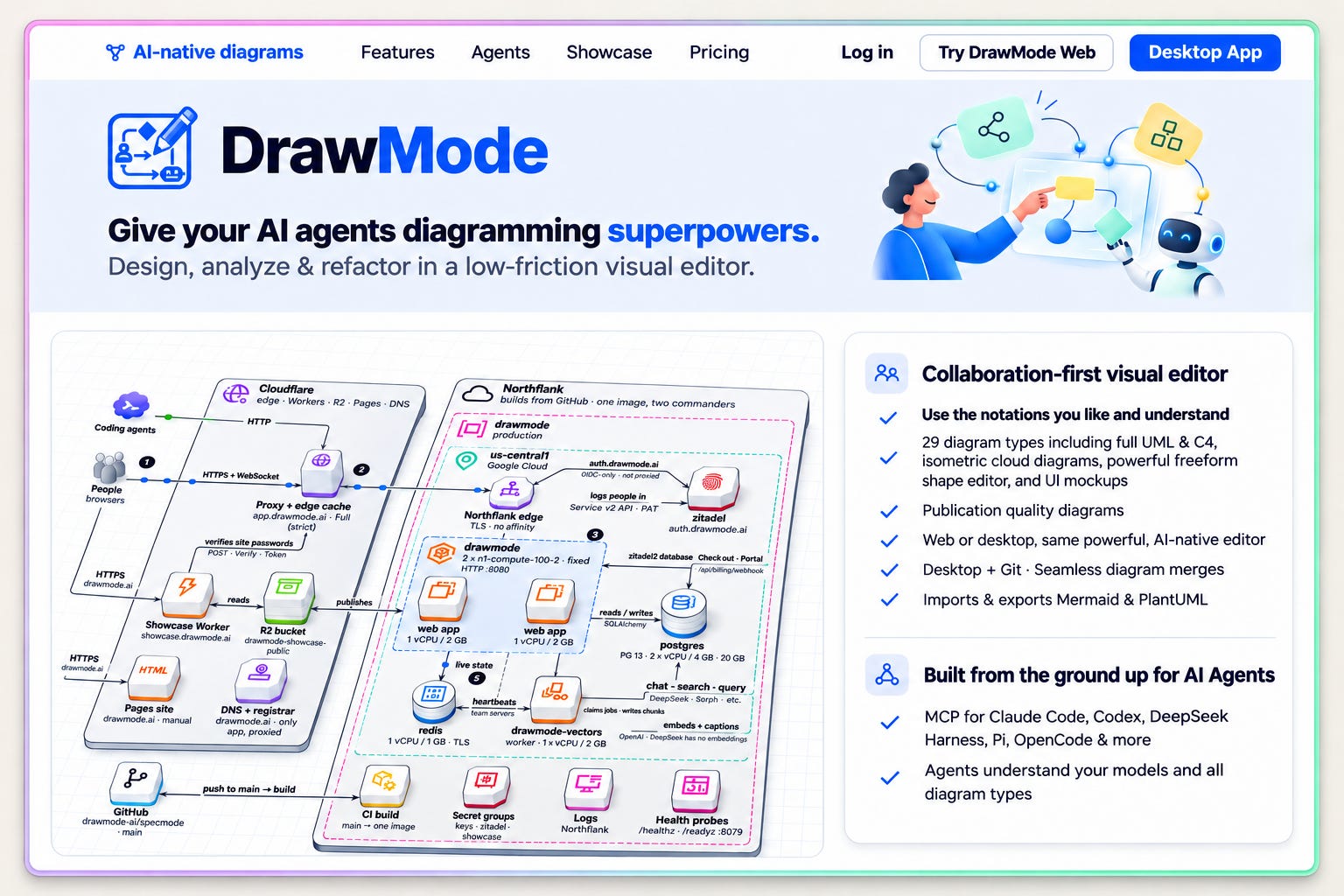
DrawMode is a collaborative diagramming tool built from the ground up for AI agents and Git. Connect Claude Code, Codex, DeepSeek Harness or your favorite agent and ask it to show you your architecture - it reads your code and draws it. It shows you what it’s building, and you change the design to direct what to build next.
Ask for a C4 view of the whole system, a UML class or sequence diagram of one part, or an isometric cloud diagram of how it runs on AWS, Google Cloud or Azure.
If you’re writing code with AI, give DrawMode a try and let me know how you like it!
Butler argues that accelerating implementation moves bottlenecks elsewhere, including CI, approvals, and review. He also calls for shared improvements and organizational investment, while explicitly preserving the importance of expertise, architecture, documentation, and tests. (Proton’s manifesto)
That is a much more useful ambition than buying everyone an AI subscription and waiting for the roadmap to complete itself.
Consider a team whose agent finishes a feature before lunch, only for the change to spend three days waiting for a reviewer and another day fighting an unreliable test environment. Faster implementation helped, but the customer is still waiting.
The next improvement might be a faster test suite, clearer acceptance criteria, or a smaller change that is easier to evaluate. Those improvements require engineering time. Leadership has to fund them.
I want more engineering leaders to take that seriously. Using AI effectively should include improving the conditions in which the agent works and the process that turns its output into something useful.
We have always had to balance speed and security
Every software team operates with limited time and incomplete information. We decide how much testing a change needs, which dependencies to trust, when to release, and which risks require specialist attention.
Those requirements existed before coding agents and even LLMs.
A company can spend too little on validation and ship a preventable vulnerability. It can also maintain a slow approval process that provides very little protection. Taking longer is not, by itself, evidence of being safer.
Suppose a security specialist repeatedly catches the same authorization mistake in reviews. The team could build a safer shared abstraction, add targeted regression tests, and make the correct pattern easy for both humans and agents to follow. Future changes could become faster to produce and easier to trust.
There are still real tradeoffs. A specific release may need another day of investigation. A novel cryptographic change may require scarce expert attention. Some assurance is expensive, and pretending otherwise will not make it cheaper.
The useful leadership question is: What evidence do we need to release this safely, and how can we obtain it sooner?
Sometimes the answer is better automation. Sometimes it is a smaller release. Most of the time it’s some combination of these and other mitigations.
Speed also matters to security. A team that can confidently deploy a fix today has an advantage over one that needs a week to release anything. The goal should be to build a delivery system capable of responding quickly without making safety depend on everyone being lucky.
Culture is where I become concerned
According to 404 Media’s October 29 investigation, an employee asked for several days to penetration-test new code before release. CEO Andy Yen reportedly dismissed the concern as “loser thinking”.
404’s reporting, based on employee interviews and internal materials, also describes employees feeling reluctant to raise concerns. In its response to the publication, Proton acknowledged anxiety among staff and shortcomings in how leadership had communicated the transition.
A security objection should be open to challenge. Engineers should be able to explain the failure they are worried about and the evidence that would address it.
Leadership owes them a technical response.
If raising an inconvenient risk becomes a test of whether you have the right attitude, the organization creates an incentive to keep that risk quiet. A green dashboard becomes less meaningful when people have reasons to avoid reporting bad news.
That would worry me at any software company. For Proton, whose products explicitly promise privacy and security, I would consider protecting technical dissent a core management responsibility.
You can require engineers to engage seriously with AI while also rewarding someone who demonstrates that an agent’s output is unsafe. In fact, that is exactly the combination I would want.
Human review requirement is a culture decision too
The manifesto also anticipates eventually eliminating most human code review.
But removing a reviewer requires understanding what judgment that person supplied and how the new process will provide adequate assurance.
I’m also not fully convinced that this is a reasonable path. At least for now, and I think for a long time to come, humans are providing insight that machines are missing. This is especially true of business context.
But a mandatory human approval can become an empty ritual. What’s to say the human isn’t just asking Claude to review the PR and then smacking LGTM on it without reading a single line. If the reviewer is overloaded, lacks the relevant context, or simply trusts the generated explanation, their presence provides limited assurance.
Proton’s November 10 clarification is useful here. The company says every code change still requires human approval, core cryptography changes require specialist review, automated security scans remain mandatory, and agents operate with limited permissions. It describes AI review as an additional layer.
That is a substantially more convincing account of engineering practice than a general demand for speed.
More autonomy can be reasonable for a narrowly bounded change with strong validation. I endorse this even moreso when the process involves lots of deterministic checks. Still, critical tasks like changing account recovery or encryption deserves a much higher bar. The number of lines involved tells you very little about that distinction.
The engineering culture Proton should build
My view is that Proton should keep pushing hard on AI adoption, but make it clear where humans are most valuable. This includes code reviews! There is real value in expecting engineers to learn new capabilities, improve shared workflows, and automate work that no longer needs their constant attention.
The culture I would want rewards an engineer who makes a workflow faster, an engineer who makes a security check more effective, and an engineer who catches a reason that a PR shouldn’t go out.
Those contributions all help the company deliver software its users can trust.
Proton should want engineers who can get extraordinary work out of an agent and still say, confidently, that a particular change is not ready.