
A few weeks ago, Tailwind Labs was acquired by Shopify.
On its own, that isn’t particularly surprising. Tailwind CSS is enormous. At the time of the acquisition, Adam Wathan said the framework was being installed more than 110 million times per week and was used by companies including OpenAI, X, Cloudflare, Reddit, and Shopify itself.
But the story gets much more interesting when you look at what happened to Tailwind before the acquisition.
Earlier this year, the founder revealed that traffic to Tailwind’s documentation had fallen roughly 40% from early 2023, even as Tailwind itself became more popular than ever. Revenue had fallen close to 80%.
But Tailwind was still popular! In fact, more popular! How could this be??
For years, the business model was pretty straightforward. Developers would Google something like:
tailwind center div vertically
They’d land on the Tailwind documentation, figure out the class they needed, and while they were there they might discover Tailwind Plus, templates, UI components, or another paid product.
AI coding tools broke that loop.
Now I can ask Cursor or Claude Code to build the component. The agent already knows Tailwind reasonably well. If it doesn’t, it can fetch the documentation itself.
I still use Tailwind all the time, and I might even use it more because AI is good at writing Tailwind. But after seeing this, it did occur to me that it had been a long time since I’d seen the docs!
We built an entire developer economy around learning
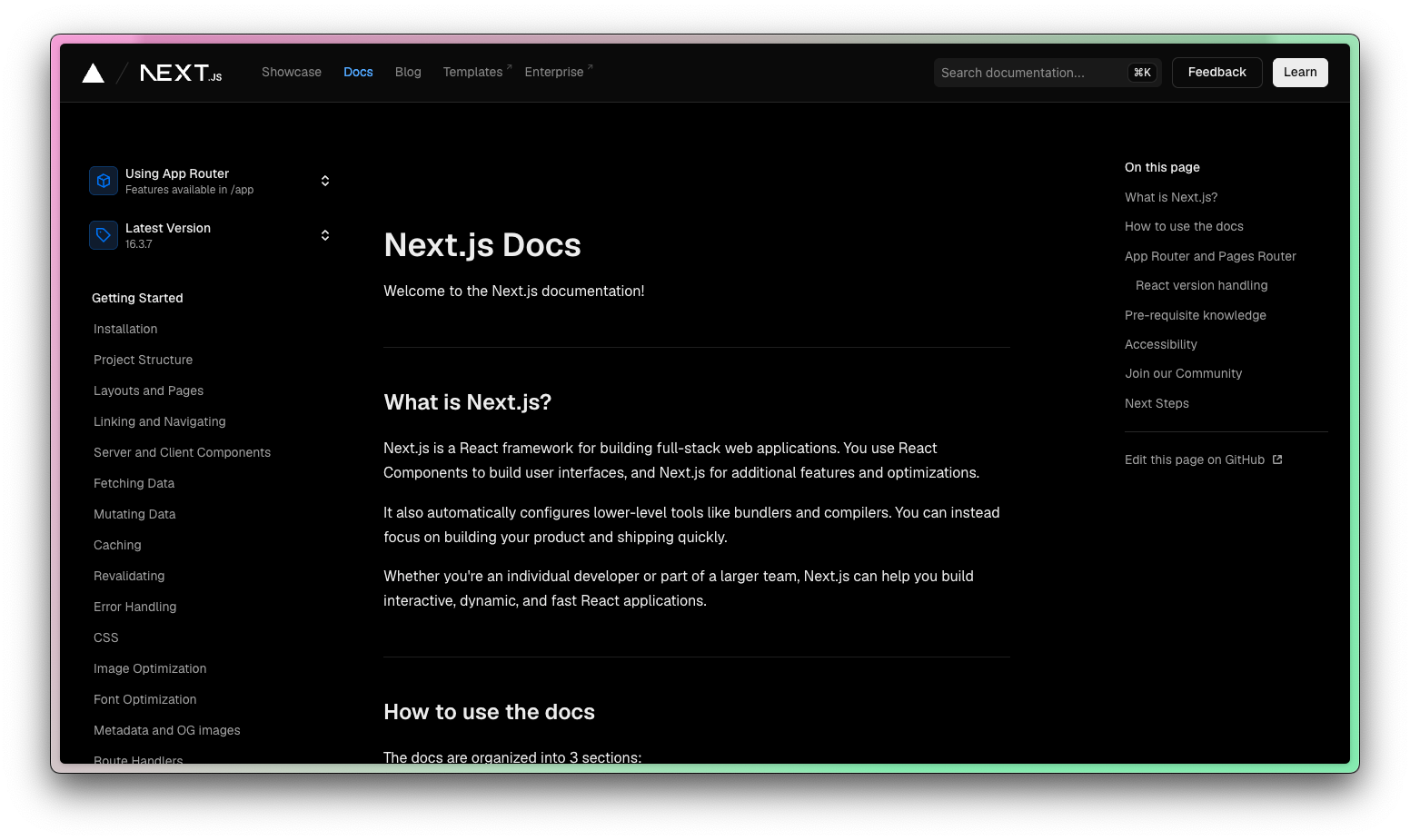
For a long time, one of the best ways to market developer tools was to teach developers things.
Companies would pay good money for incredibly detailed tutorials. You might spend days building a sample application, taking screenshots, explaining an architecture, documenting every command, and turning the whole thing into a 3,000-word guide.
That made economic sense because developer attention was valuable.
A company like Vercel could publish an article explaining how to build some application with Next.js. A developer would Google their problem six months later, find the article, learn something, discover Vercel, and potentially become a customer.
Look at the websites of almost any successful developer-tool company from the last decade and you’ll see the artifacts of this strategy everywhere.
Documentation.
Tutorials.
Blog posts.
Courses.
Example applications.
“Build X with Y” walkthroughs.
Entire DevRel teams existed partly to create this stuff. Search made education a customer-acquisition channel, but search is becoming a much worse customer-acquisition channel.
Google AI Overview has KILLED the click-through rate for the first organic result, which is a pretty fundamental problem if your business model depends on answering developers’ questions on the internet.
Today’s post is sponsored by re:cinq

AI coding tools can speed up individual developers. A software factory creates the shared platform, workflows and guardrails needed to scale that impact across the organization.
This free whitepaper sets out a practical, federated blueprint for agentic development at enterprise scale—helping engineering leaders move beyond isolated pilots towards a scalable operating model.
Tailwind isn’t an isolated example
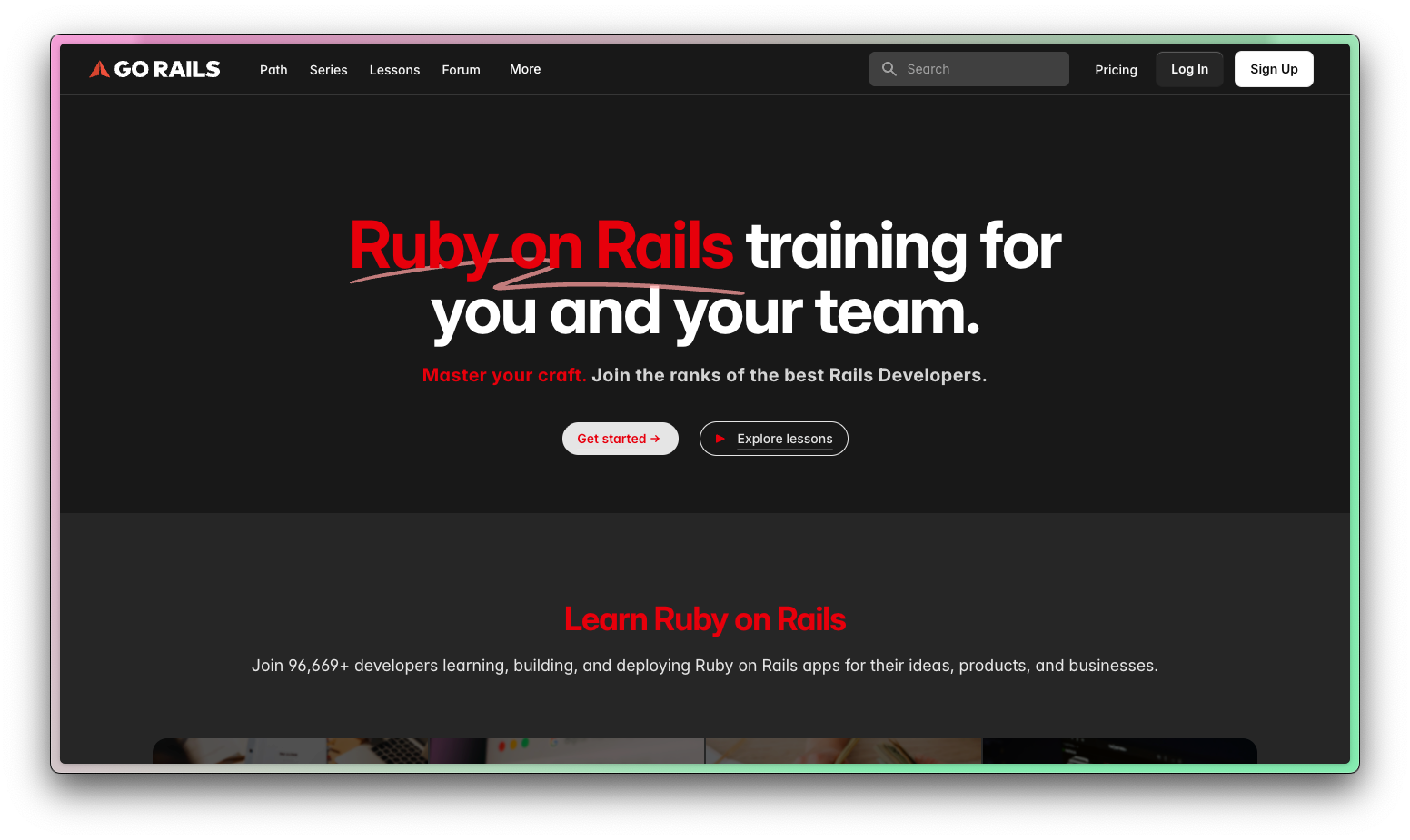
This one hits especially close to home for me because I’ve been a Rails developer.
GoRails has been one of the best Rails educational resources on the internet for more than a decade. Chris Oliver built a large library of Rails screencasts and tutorials, then expanded the business into products like Jumpstart and the Rails hosting platform Hatchbox.
For years, the education business helped fund everything else.
That has changed.
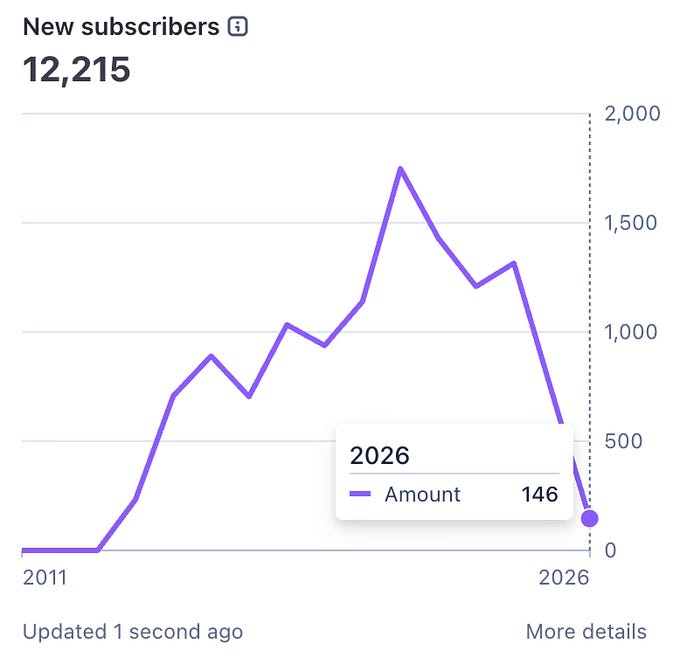
Earlier this month, Chris wrote that “AI has been brutal to most education businesses and we are no exception.” He said GoRails had historically subsidized Hatchbox development, but that model no longer worked. GoRails expects fewer new customers in 2026 than it had during its first year in business. Oliver and Collin Jilbert have spent much of the last year shifting their attention toward Hatchbox instead.
They later had a really interesting conversation about this on the Ruby on Rails Podcast.
The irony is that they’re using AI heavily themselves.
AI lets them research unfamiliar systems, refactor complicated Rails applications, prototype features, and do work dramatically faster.
At the same time, developers can use those exact tools to bypass the educational products GoRails built. Previously, you ran into a Rails problem, searched for a tutorial, watched Chris solve a similar problem, understood what he was doing, and adapted it to your application.
Now Claude Code can inspect your actual application and solve the problem there.
It’s nice as a developer that we can move so quickly, but it’s sad to see it crushing a very healthy business model.
We aren’t searching for answers as much anymore

Think about how you learned a new technology five years ago. Maybe you bought a Udemy course. Maybe you found a YouTube series. Maybe you followed a blog tutorial.
Maybe you sat down with the official documentation and built the canonical Todo app.
When was the last time you actually followed a 14-hour Udemy course from beginning to end?
I’m sure plenty of people still do. But increasingly, that isn’t how I learn software.
I start building something. When I hit something unfamiliar, I ask the model. When the model gives me something suspicious, I ask it why. If necessary, I pull up the documentation.
Then I keep moving.
Stack Overflow’s own data shows the shift happening.
Documentation is being rewritten for machines
This might be the most visible change once you start looking for it.
Open a modern developer documentation site and you’ll increasingly see things like:
Copy page
View as Markdown
Ask AI
Connect MCP
The current Vercel documentation, for example, literally puts “Copy page” and “Ask AI about this page” above its documentation.
Documentation platforms are building even more infrastructure around this.
GitBook now automatically exposes Markdown versions of documentation pages, generates llms.txt and llms-full.txt, and can expose documentation through MCP.
New documentation needs to give the model enough authoritative context and let it apply those instructions to the developer’s actual application.
That is part of why /llms.txt is such an interesting development.
Jeremy Howard proposed the format in 2024 as a simple way for websites to give LLMs a clean, structured map of their important content. It’s still better described as an emerging convention than a universally supported web standard, and major model providers have not all formally committed to consuming it. But documentation companies and developer-tool companies have adopted it aggressively.
The idea is almost comically simple.
We spent decades optimizing websites for humans and Google.
Now we’re starting to publish a second interface for the machines.
And developer documentation is one of the first places where that transition makes obvious sense.
We need to become more intentional about learning
I have no interest in giving up AI coding tools just so I can recreate the educational experience of 2018. That would be like refusing to use Google because reading library books builds character. The challenge is making sure you’re still developing the knowledge that lets you use them well.
For me, that increasingly means separating execution from education. When I need to ship something, I want the agent to remove as much friction as possible.
When I’m working in an area I actually want to understand, I need to deliberately put some of that friction back.
That might mean:
reading the primary documentation instead of accepting the generated solution;
asking the model to explain the architecture and tradeoffs after it implements something;
reviewing generated code closely enough that you can explain why it works;
occasionally building a small piece yourself when you’re trying to develop a new skill;
investigating failures instead of immediately asking the agent to make the red error message disappear;
using AI as a tutor, not only as an executor.
None of this requires pretending AI doesn’t exist.
In fact, AI might ultimately become the best developer-education technology we’ve ever had.
A great teacher who understands your codebase, knows exactly what you already know, can answer unlimited follow-up questions, and can generate a custom exercise around the thing you’re struggling with would have sounded absurdly powerful a few years ago.
We now have a rough version of that sitting in our terminals, but the default behavior of these tools is usually to solve the problem. That isn’t necessarily the same thing as teaching you!
For those curious, I wrote more about using AI intentionally and continuing to learn in this tutorial.
How to use AI to write code without skill atrophy

Experienced software engineers have embraced AI coding assistants like GitHub Copilot, Cursor, Claude Code, and more as game-changers for productivity. But with AI making coding easier and more “hands-off,” there’s a new challenge.
AI increasingly lets us drive straight through. That’s wonderful for productivity.
Just make sure that every once in a while, you still pull over and figure out where the road goes.